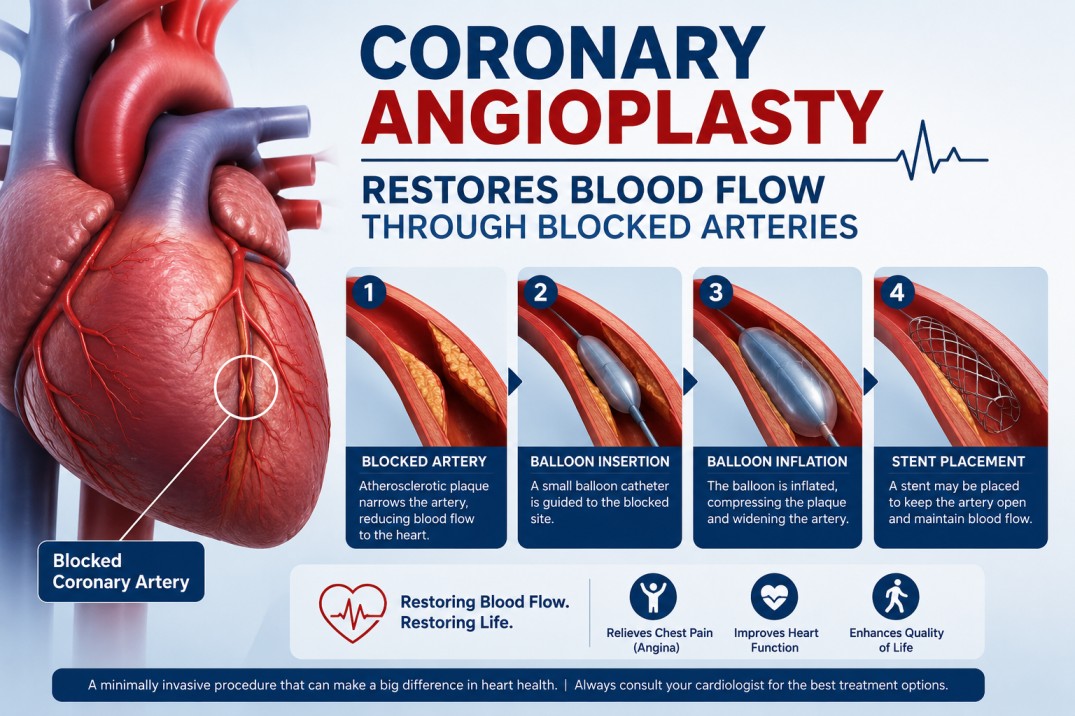
As modern lifestyles become more stressful, sedentary, and dependent on unhealthy food, heart disease becomes more prevalent. Coronary Angioplasty is an efficient way to treat blocked heart arteries.
At our center, Dr. Rasesh A. Pothiwala, we focus on patients’ health and cardiac safety, rapid heart healing, and the prevention of the long-term consequences of heart injury.
Coronary Angioplasty Explained
Coronary Angioplasty is a medical operation that reopens blocked or narrowed coronary blood vessels that supply the heart's muscles with blood and oxygen. They are the blood vessels that comprise the coronary arteries, and they can become clogged with plaque.
The procedure involves introducing a catheter with a small balloon at its tip, inflating the balloon, and thereby widening the artery. A stent is usually introduced after the catheters are deflated, and the arteries are expected to remain open and healthy for blood flow.
f(x) = Blood flow restoration in a coronary artery
Why Would You Require Coronary Angioplasty?
Your doctor may recommend Coronary Angioplasty if you experience
- Chest discomfort or angina
- Breathlessness
- Physical activity-induced fatigue
- Blocked heart arteries
- Symptoms of a heart attack
This procedure can reduce the risk of severe outcomes of heart conditions and restore normal blood flow in the body.
Angioplasty and Its Merits
1. Less Painful and Less Scarring
Angioplasty involves only incisions. In comparison to open heart surgery with more scalpel actions, recovery after surgery is more painful, and the scarring is larger.
2. Fast Recovery
Most people can resume regular activities just a few days after the surgery.
3. Heart Function Improves
Normal blood circulation is restored to the heart after this surgery. This improves the functioning of the heart muscle.
4. Pain Reduces
Chest pain and heart pain are almost always immediately relieved after the surgery.
5. Future Heart Attacks Are Less Likely
Unclogging arterial blockages decreases the severity of heart issues in the future.
Coronary Angioplasty Overview
Coronary Angioplasty consists of the following:
A catheter is placed in an artery located either in the wrist or in the groin. A stent is then placed in the same blockage for the artery to remain open. This procedure is followed by the bead. The insertion of a catheter and the placement of the stent constitute the procedure.
Recovery After Coronary Angioplasty
Recovery after Coronary Angioplasty is usually smooth when proper recovery is observed. Patients are asked to:
Take medicines when they are advised
Practice a heart healthy diet
Refrain from smoking and use of alcohol
Engage in a regular routine of physical exercise
Adhere to the follow up care if requiredThese improvements in lifestyle are remarkably important in interrupting future plaque formation in arteries.
Why Choose Dr. Rasesh A. Pothiwala for Coronary Angioplasty?
Dr. Rasesh A. Pothiwala has an impeccable reputation for rendering world-class cardiac services and is known for his customized treatment plan and best-in-class procedures in interventional cardiology.
Highlights:
- Cardiac Specialist with Experience
- Advanced techniques in Angioplasty
- Customized Heart Therapeutics
- Latest Diagnostic Facilities
- All-Inclusive Cardiac Solutions
He has designed various treatment plans which inspire his patients to take an active role in their healthcare and improve the quality and function of their hearts.
Conclusion
Coronary Angioplasty is a modern, minimally invasive technique to treat an increasingly common condition of narrowing or blocked heart arteries, hence improving the heart's function and significantly reducing the risk to a person's life. To have a healthy heart, it is imperative that the condition be diagnosed early, and the right treatment be provided in good time.
Please consult Dr. Rasesh A. Pothiwala to get sophisticated cardiology treatment if you or your family members happen to have symptoms of heart disease.