
One of the most important decisions a patient can make when faced with a diagnosis of a serious blockage in heart arteries is choosing the right cardiologist. Many coronary blockages can be treated with standard angioplasty. Other cases can be more difficult due to the location, length, severity, calcification, or total blockage of the coronary artery. These situations can require more elaborate strategies, specialized skills, and a greater depth of experience in interventional cardiology.
Patients and their families often search for the Best cardiologist for complex angioplasty in Ahmedabad when they are suggested to undergo treatment for a difficult case of coronary artery blockage. Though many people may rely on online rankings, ads, or a single referral when choosing a cardiologist, it is important to consider the cardiologist's experience in similar difficult cases, as well as the technologies available to them, their capacity to perform high-risk procedures, and their philosophy of patient care.
For high-end cardiology, Dr. Rasesh A. Pothiwala has aligned himself with complex and high-risk coronary interventions. His profile shows challenging cases of blocked coronary arteries and advanced angioplasty with the help of specialized technologies in complex cardiac procedures. Given the nuances of complex angioplasty, patients must also consider other items of importance when choosing their specialist.
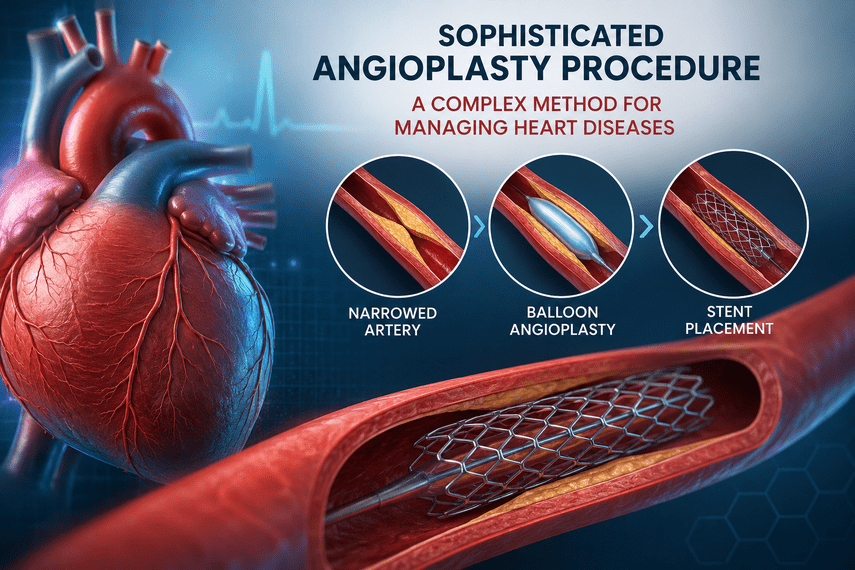
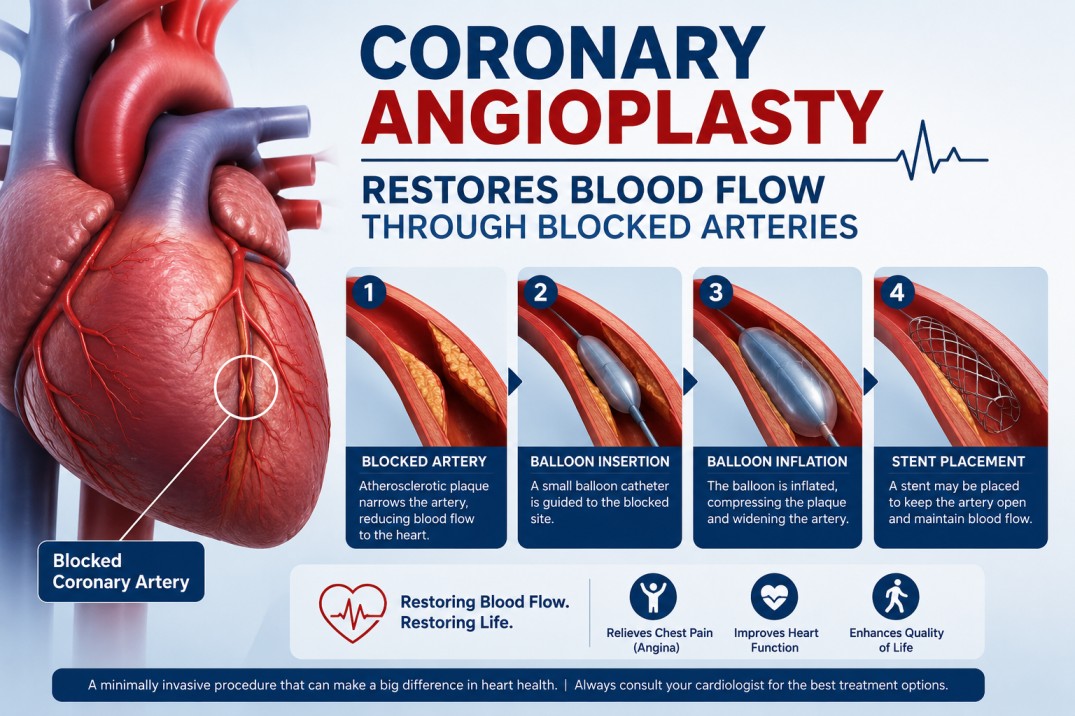
Coronary Angioplasty, or Percutaneous Coronary Intervention (PCI), is a relatively non-invasive method of restoring blood flow to blocked or narrowed coronary arteries. To treat an arterial blockage, a catheter can be guided to the relevant artery and specialized tools can be used to open the blockage. A stent can also be placed to help keep the artery open.
However, not all blockages are easy to treat. Some complex coronary blockages can include:
Multiple long blockages
Chronic Total Occlusions (CTO), or completely blocked arteries
Blocked arteries that are heavily calcified
Blockages located at key branches of an artery
Left main coronary artery disease
Bifurcation lesions
Failed blockages from previous angioplasty attempts
Patients with multiple comorbidities
High-risk blockages which can involve extra support
Complex angioplasty can treat some of these complex coronary artery blockages. This can involve precise and advanced techniques, specialized imaging, devices and tools, and an experienced interventional cardiology team. The plan for this treatment will be based on the findings of an angiography along with the medical history and other diagnostic tests, the patient's symptoms, and current cardiac function.
Complex coronary procedures can involve a large number of highly specialized techniques and tools. The successful treatment of complex lesions can depend on the technique, the overall health of the patient, the blockage, and the experience of the treating team.
Complex coronary cases can involve a challenge to find multiple treatment options. A consultant may be more familiar with the tools and techniques to treat heavily calcified, difficult to reach, completely occluded, and even high-risk coronary artery blockages.
Patients searching for the Top cardiologists in Ahmedabad must evaluate cardiologists' experiences in complex angioplastic procedures.
Relevant experience is the most important factor to evaluate. While some cardiologists may have decades of experience in performing multiple cardiac procedures, complex angioplastic procedures may be out of the scope of that experience.
Patients must evaluate the experiences of cardiologists in various procedures including:
CTO angioplasty
Left main coronary artery interventions
Bifurcation lesions
Heavily calcified blockages
Rotablation and atherectomy procedures
Intravascular lithotripsy
High-risk coronary interventions
Image-guided angioplasty
It is best for the cardiologist to have experience in the particular case that the patient presents. For instance, a patient presenting with heavily calcified lesions may require a cardiologist that has experience in the modification of calcified lesions, whereas a patient presenting with a chronic total occlusion may require a cardiologist that has performed numerous CTO interventions.
Cardiology, in and of itself, is a broad specialty and as such, cardiologists may concentrate on the various sub-specialties in heart care.
While some cardiologists may perform preventive and routine care and management of heart issues, other cardiologists may perform other subspecialties of cardiac care that are minimally invasive, such as cath lab procedures including cardiac angioplastic procedures and placement of cardiac stents.
For patients needing complex cardiac angioplasty, it is necessary to engage the services of interventional cardiologists that have in-depth experience in that specialty. Experienced Heart specialists in Ahmedabad will evaluate the blockage and the various treatment modalities to manage the blockage.
One thing patients ought to bear in mind is that every case is unique. A general practitioner or any other specialist is not in the position to prescribe treatment without a thorough analysis of the patient’s history and reports.
Modern technology has evolved even the way cardiac procedures are undertaken. Advanced imaging significantly improves the precision and successful outcome of a cardiac procedure.
Depending on the condition of the patient, the following technologies may be available to the cardiac team:
IVUS (Intravascular Ultrasound)
OCT (Optical Coherence Tomography)
FFR (Fractional Flow Reserve)
Rotablation
Orbital atherectomy
Intravascular Lithotripsy (IVL)
Mechanical circulatory support systems
The availability of these technologies depends on the clinical situation and the cardiologist’s evaluation. The presence of these technologies may play a significant role when considering a center or a specialist to perform challenging and complex angioplasty.
Certain conditions may elevate the patient’s risk of undergoing a cardiac procedure. These include, age, decreased function of the heart, decreased function of the kidneys, diabetes, and having multiple blockages.
In such situations, the cardiologist should evaluate:
The patient’s overall health
Heart pumping function
Kidney function
The severity and location of blockages
Previous cardiac procedures
Possible complications
Alternative treatment options
In such cases, a high-risk angioplasty may be initiated with a number of support technologies. A cardiologist can help the patient understand both the risks and the benefits.
A thorough analysis must be done prior to complicated angioplasty. While coronary angiography is vital to understand where and how severely the arteries are blocked, additional imaging may sometimes be needed.
Intravascular imaging may help identify some plaque and calcium characteristics as well as the size of the arteries. Some of the physiological assessment tools may help determine the degree of impairment blood flow may have due to arterial stenosis.
Every patient has a different heart problem. What may be a fit treatment for one person may not be for someone else.
A customized treatment plan may take into account:
Age
Symptoms
Medical history
Diabetes and blood pressure
Kidney function
Heart function
Number and location of blockages
Previous treatments
Lifestyle and recovery requirements
A good cardiologist will not offer a treatment plan without having a full understanding of the patient’s situation. People must have the opportunity to talk about their diagnosis, possible treatments, expected recovery and post treatment care.
While the skill of the cardiologist is key, complicated angioplasty requires a sufficiently advanced Cardiac Care environment.
People must take into consideration if the hospital or cardiac center has:
A modern cardiac catheterisation laboratory
Advanced imaging systems
Emergency cardiac support
Experienced nursing and technical teams
Intensive care facilities
Access to multidisciplinary medical support
Some complicated cases may need additional medical specialists and advanced support. Therefore, in some cases, the cardiac care environment and infrastructure must be sufficiently advanced.
Depending on the type of obstruction, angioplasty may need distinctive techniques. For instance, plaque that is calcified may need calcium-modifying techniques, while a fully occluded artery may need special techniques to cross the obstruction to treat it.
Among the many techniques used in advanced cases, the following three may be used in particular cases:
Rotablation
In case of heavily calcified plaque, rotablation may be used to modify the calcified plaque.
Intravascular Lithotripsy (IVL)
In cases of plaque that is calcified lithotripsy may be used to modify the plaque.
Orbital Atherectomy
This may be used in severely calcified coronary plaques.
Image Guided Angioplasty
In cases where intravascular ultra sound (IVUS) or Optical Coherence Tomography (OCT) is used, they may help in planning and optimizing the stent.
Each case is unique and no single technique is universal.
Angioplasty only helps to treat the obstruction and not the long term health of the heart. It is important to control the risk factors for coronary artery disease.
Following the procedure the patients may need to focus on:
Taking prescribed medicines regularly
Controlling blood pressure
Managing diabetes
Maintaining healthy cholesterol levels
Following a heart-healthy diet
Staying physically active as advised
Avoiding tobacco
Maintaining regular follow-up appointments
Cardiologists should focus on long term care of the patients to help them understand the risks.
Finding a suitable cardiologist for complex angioplasty involves weighing multiple factors, including hospital facilities, advanced technology, experience, and communication. When it comes to your cardiac care, be as specific as possible instead of relying on generalizations. Focus on a specialist's experience with your condition rather than simply their knowledge of complex cases. Dr. Rasesh A. Pothiwala offers expertise in interventional cardiology, making him a consideration for patients seeking specialized care for complex coronary conditions.
If you are trying to find the Best cardiologist for complex angioplasty in Ahmedabad, familiarize yourself with your condition, be inquisitive and consult someone in interventional cardiology with the skill to deliver optimal care. Complex coronary artery disease can be debilitating, and with an adequate assessment and directive approach to care, patients can take control of their condition and make strides in disease prevention.
Schedule a consultation with an experienced interventional cardiologist today to discuss your condition and explore the most suitable treatment options for your heart health.




Dr. Rasesh Pothiwala (Divya Heart Care Foundation) All rights reserved. Optimize by SEO Company in Ahmedabad | ARE InfoTech