Heart diseases happen to be one of the leading causes of illness across the globe, among which coronary artery disease is one of the commonest. Narrowing and blockage of arteries that transport blood to the heart lead to various problems including chest pain and heart attack. In cases where regular angioplasty is not sufficient enough, an advanced type of this procedure needs to be performed called Complex Angioplasty.
We at Dr. Rasesh A. Pothiwala perform advanced cardiac procedures and provide personalized care to our patients through the use of advanced technology.
Complex Angioplasty is a sophisticated minimally invasive treatment technique to help open up seriously narrowed or blocked coronary arteries that cannot be treated by standard angioplasty techniques.
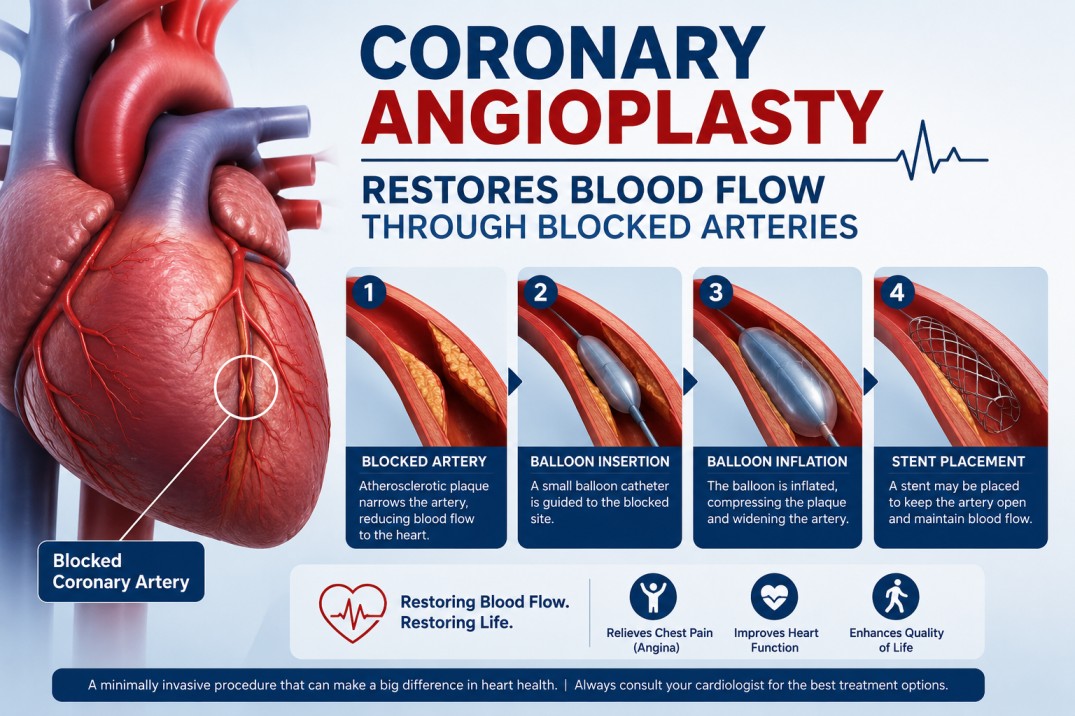
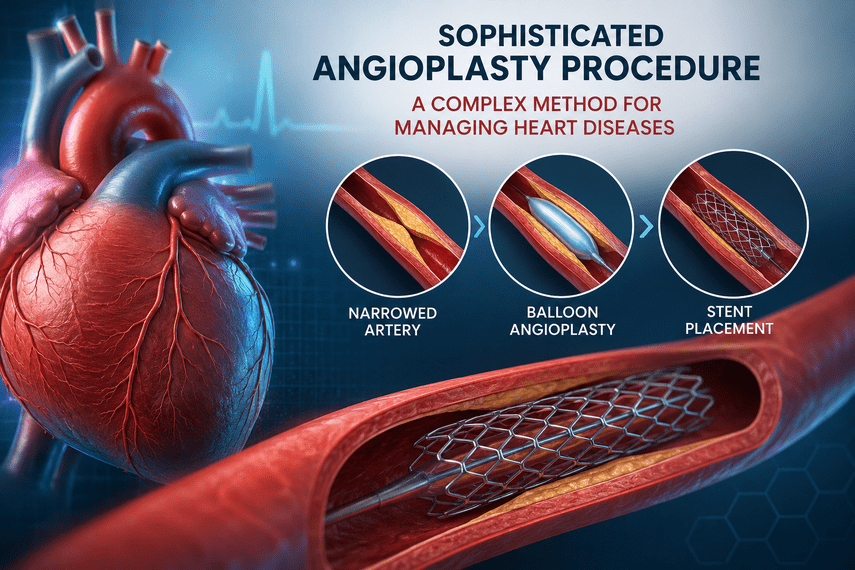
In this technique, a very thin catheter is introduced through an artery in the wrist or groin and positioned at the point where the coronary artery is blocked. Here the balloon is inflated to increase the width of the artery, and a stent is placed into the artery to restore the proper blood flow. In some cases, specialized technologies such as intravascular imaging, rotational atherectomy, or guidewires may be required for treating tough blocks.
Complex Angioplasty is advised by your cardiologist in the case of:
Multiple blockages in coronary arteries
Long or serious narrowing of arteries
Chronic Total Occlusion (CTO)
Left Main Coronary Artery Disease
Arteries that have heavy calcification
Blocks in bifurcation (branching) arteries
Failure of previous angioplasty procedure
High-risk coronary artery disease
People with complex cases of coronary artery disease could have the following symptoms:
Chest pain (angina)
Shortness of breath
Fatigue with physical activities
Palpitations
Shoulders, neck, jaw, or arm pain
Symptoms of a heart attack
Please go and seek medical care if you have one or more of these symptoms mentioned above.
There are some important advantages of Complex Angioplasty:
Improved Blood Flow
Provides oxygenated blood flow to the heart muscle.
Pain-Free Chest
Helps with reduction of angina.
Non-invasive Surgery
Does not involve making any big cut on the body.
Quick Recovery
It takes shorter recovery time compared to open-heart bypass surgery.
Prevention of Heart Attack
By treating severe blockages, the chance of having a heart attack in the future can be minimized.
Quality of Life
Patients feel more energetic and physically active.
The following steps are usually undertaken in such procedures:
1. Diagnosis
Coronary angiography reveals where the blockages occur in arteries.
2. Catheter Insertion
The insertion of the catheter through either radial or femoral arteries.
3. Advanced Treatment
Use of advanced tools like balloons, guidewires, atherectomy devices or imaging systems to cross and clear the blockages.
4. Stent Insertion
A drug-coated stent will be inserted into the artery so that it remains open.
5. Patient Observation
Observation of patients and discharge after one or two days depending on how complex the process is.
Proper recovery is very important for long-term success.
Patients should:
Use medications as prescribed.
Follow a healthy-heart diet.
Stop smoking and using tobacco products.
Control diabetes, cholesterol and high blood pressure.
Exercises as guided by the doctor.
Go for check-ups.
Normally, most people can go back to their usual activities in a few days.
As mentioned above, Complex Angioplasty is a relatively safe method, however, like every other procedure performed by a doctor, it involves certain risks, which include such factors as:
Bleeding in the catheter insertion area
Development of blood clots
Reaction to contrast dyes
Arrhythmia
Restenosis
The possibility of myocardial infarction or stroke (quite rare)
Selecting a skilled interventional cardiologist helps avoid these risks.
Dr. Rasesh A. Pothiwala is dedicated to providing high-quality cardiac care using innovative methods based on evidence and centered around patients.
Modern Diagnostic Imaging Facilities
Customized Care Program
Minimally Invasive Techniques in Cardiology
Comprehensive Cardiovascular Care
Focus on Patients' Safety and Cardiac Wellness
Every patient receives personalized care to obtain the best results.a
Following your treatment, it is important that you live a healthy life.
Eat a healthy diet of lots of fruits and vegetables.
Exercise often.
Keep a healthy body weight.
Control stress.
Monitor blood pressure and cholesterol levels.
Don't smoke or drink too much alcohol.
Get regular heart checkups.
Complex Angioplasty is a very sophisticated technique used to treat complex coronary artery obstruction. This procedure offers a good solution for people who don’t want to go through the traditional operation for treatment.
Should you be suffering from complex coronary artery disease, or symptoms like chest pains, difficulty breathing, then it’s important that you undergo evaluation.
Dr. Rasesh A. Pothiwala performs Complex Angioplasty with state-of-the-art equipment and care.




Dr. Rasesh Pothiwala (Divya Heart Care Foundation) All rights reserved. Optimize by SEO Company in Ahmedabad | ARE InfoTech